Hello, my lovely learners and welcome to Easy Stories in English, the podcast that will take your English from OK to Good and from Good to Great! I am Ariel Goodbody, your host for this show. Today’s episode is a conversation about Hangzhou and the joy of cycling. As always, you can find the transcript and PDF on the website, the link to which you will find in the description for this episode.

So here I am! Hello! If you are watching on YouTube, you can see some foam paneling, some acoustic foam panels. I have indeed covered the walls of my office with some acoustic foam panels, which are there to reduce some of the harsh reflections in sound.
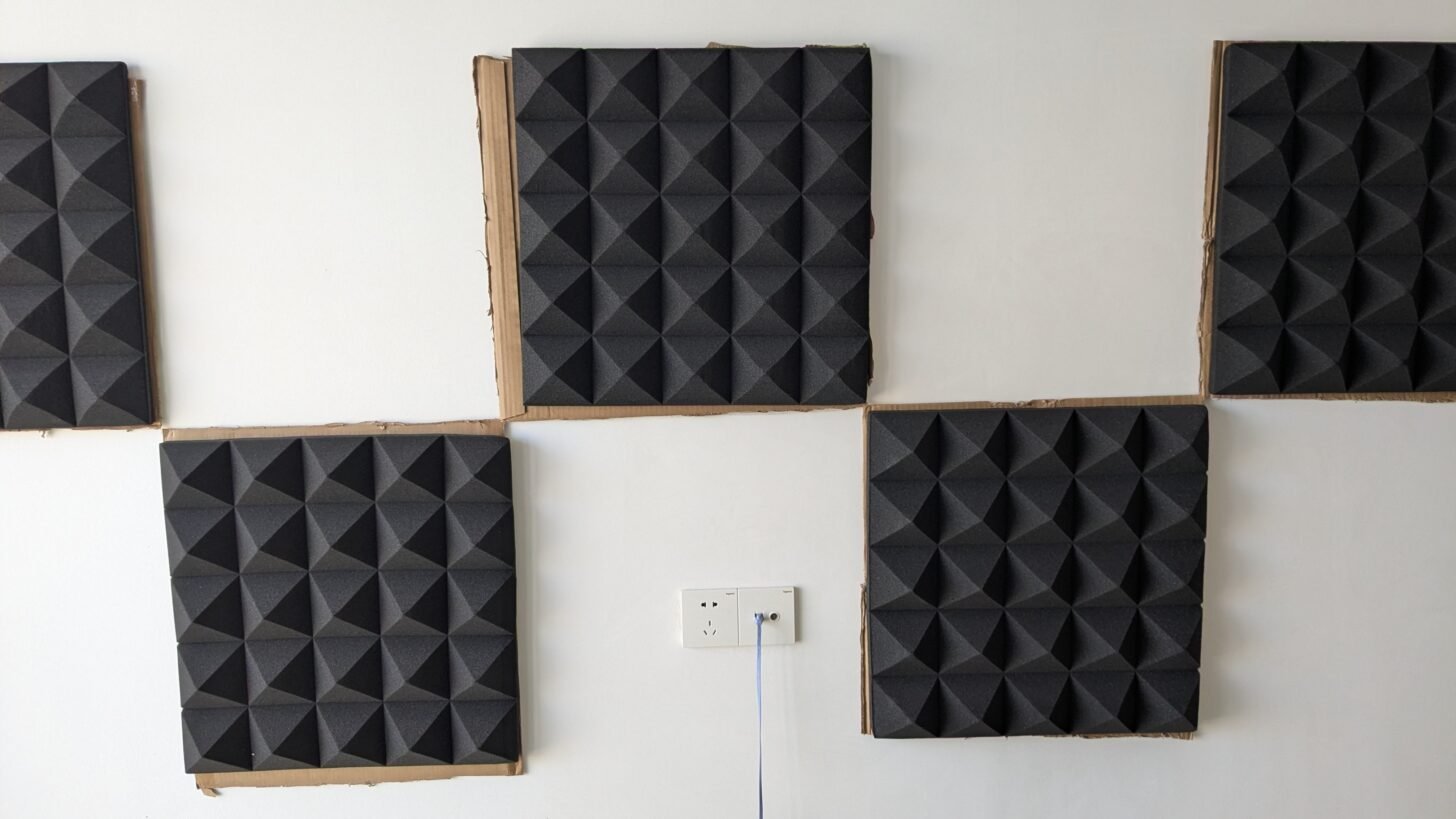
And to be honest, this kind of feels like a rite of passage for YouTubers and podcasters. It feels like something that all serious YouTubers and podcasters do, except I haven’t ever done it before. Like I thought I would’ve done it by now. But I guess I was always really resistant to putting up any soundproofing because of dealing with the landlord at the end of my rental contract, because if you directly glue stuff on the wall, it can cause problems later.
But what I’ve done here is attach the foam panels to pieces of cardboard, and then I’ve attached the cardboard to the wall with command strips, which are easy to take off without damaging the wall. So I think it should be OK. And to be honest, I know that if the landlord has any issues at the end of my rental period here, I can probably afford to lose the deposit or pay for any changes needed.
But actually, this room, um, I don’t think I’ll have to pay anything because of the humidity problem that has caused some parts of the paint to like bubble and flake. So, uh, that’s not my problem. That’s not my fault. So therefore I think a bit of foam panels on the walls is nothing.
So anyway, all that is to say, hopefully today’s episode will sound better. It should also look better because I’m recording the video with the curtains open so you can see the amya – the amyazing view? The amazing view behind me. Um. If you are listening and not watching, it’s pretty industrial. It’s just a lot of apartment buildings, unfortunately you can’t quite see, but off in that direction, there are lovely mountains, but uh, it’s still a pretty cool view.
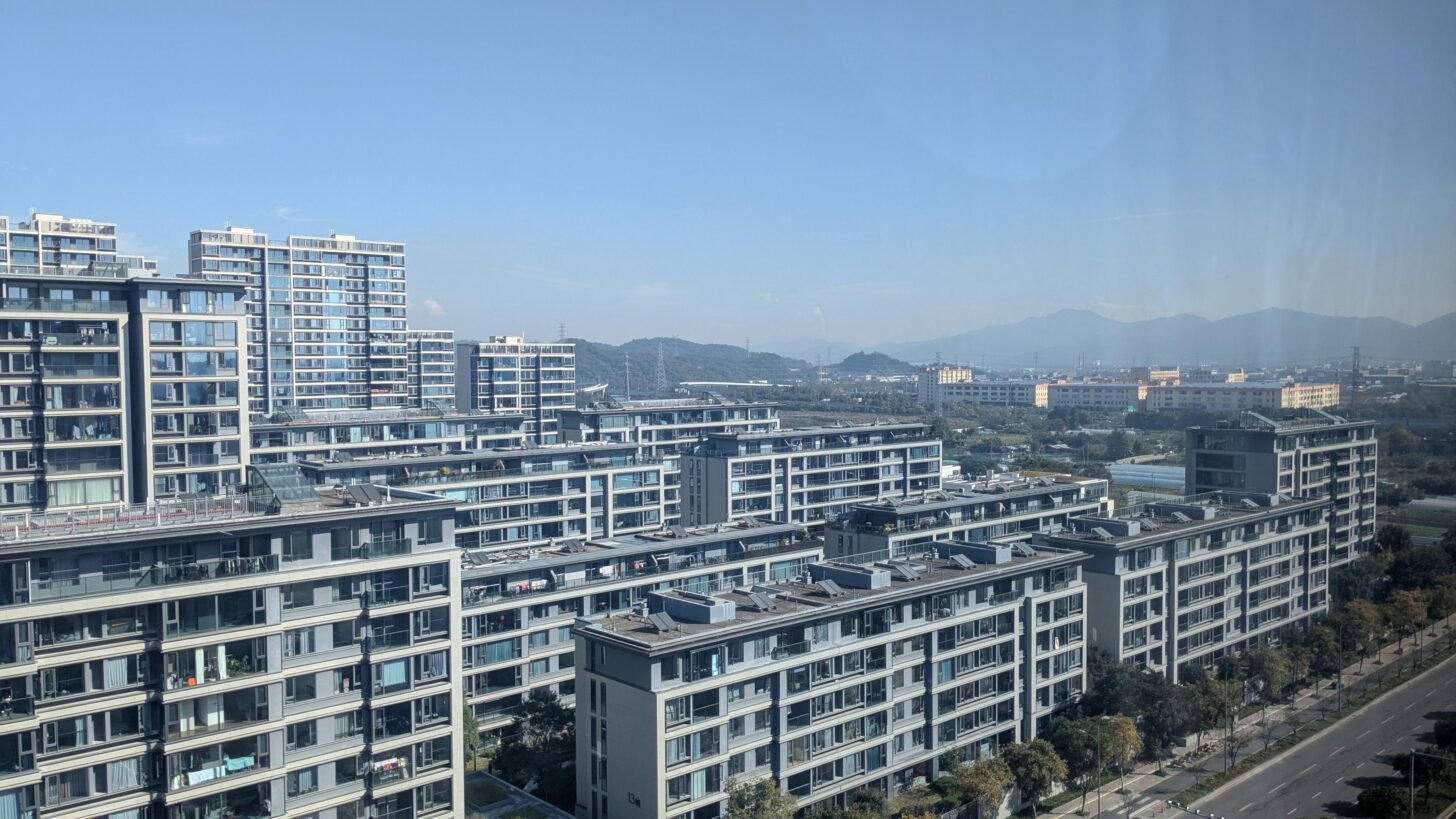
It’s definitely not the kind of view I was used to having in the UK, where even in London, many areas are quite low and there’s not a huge density of apartment buildings, but here they’re everywhere. I can also look down on the street below and watch all the people moving like ants, and the cars driving around, and it feels quite fun. I just have to avoid listening to the intrusive thoughts that are like, what if you fell out the window? What if you fell out the window and fell down all those floors and died? That’s not so fun.

Anyway, I’ve been living in China for just over two months now, and I’m kind of at that stage where the novelty has worn off, like, it’s no longer, ‘oh my God, oh my God. Everything is new.’ It’s just a bit more like, ‘oh, this is my everyday life.’ The miserable weather probably hasn’t helped with that. It looks pretty grey and cloudy today, but yesterday it was raining nonstop, so it was even worse. And yes, that kind of weather does remind me of the UK, but it’s not exactly like a happy feeling. Doesn’t fill me with joy.
So because of that, I’ve kind of been feeling a bit homesick this week. I’ve been missing home more than before. Don’t worry! I’m still fine. I’m still the lovely, vibrant, exuberant, Ariel Goodbody you know and love, but I am not feeling as ‘wahay’ as I was feeling in the first two months.
Also, work has just been a lot. Uh, work is hard. Um, teaching is difficult and we have a long time before our next big holiday. We do have some little holidays coming up in November and December, but the big, big holiday is Chinese New Year, which is in February and it’s like a North Star guiding me towards it. Like I will make it to February and have an amazing holiday.
And actually I’m really looking forward to that holiday because I’m going to Cambodia with my parents and one of my friends is coming to visit me from the UK in China. So it’s just gonna be really lovely.
My Chinese studies have been honestly flourishing. I just got to the point where I was feeling very, I don’t know, getting lots of exposure to Chinese every day. I can hold a conversation now and express myself, even if I don’t know all the precise words. I can generally understand what people are saying to me.

And I just finished reading Hali Bote, which is Harry Potter in Chinese. I just read the first Harry Potter book in Chinese. I read and listened to the audiobook at the same time, and actually I really, really enjoyed it because the audiobook production is like a full soundscape. It has music, sound effects, different voices, so it’s really pleasurable to listen to. And it’s so much easier with a language like Chinese to read and listen because otherwise in Chinese, if you come across a new character, you have no idea how it’s pronounced, so it doesn’t really stick in your head.
So I’m currently on Hali Bote book two, going through the second book, and I don’t know, I might do books three, maybe even more, in Chinese. And then I want to move on to reading some books originally written in Chinese and maybe watch some Chinese TV shows.
But I’m feeling really happy because, when I’m learning a language, like one of the biggest goals is to get to the point where I can read books. Because once I can read books and understand enough to actually enjoy them and generally follow them, that like turbocharges my language learning, like everything gets so much easier after that and I’m able to really get into like depth in the language, and I thought it was going to take me much longer to get to that level in Chinese.
But I think because of the constant exposure, I was able to go in maybe with a lower level of understanding than otherwise I would’ve been able to. Like if I had tried doing it when I was back in the UK, I think I wouldn’t have had the confidence. But now it’s like I’m just immersed in that Chinese environment, so even if I don’t understand everything, I can follow along pretty well.
Does that make sense? I think a lot of language learning is like, the feeling. And when I first arrived in China, every conversation made me nervous. It was stressful. And now I can feel pretty relaxed speaking Chinese, which I think is really where true learning starts to happen. Because once you are relaxed, it’s like your brain opens up and all of the knowledge can just pour in unfiltered.
So maybe, you know what? Maybe that’s a piece of advice for all of you. Rather than focusing on ‘what’s my level? How many words do I know? Can I understand this accent?’, focus on ‘how do I feel when I’m speaking the language? When I’m reading the language? When I’m listening to people talk, do I feel tense? Do I feel nervous, or do I feel relaxed?’
And obviously that’s quite a hard thing to change, but I do think it is ultimately one of the most valuable things you can have when you’re learning a language is that openness and freedom. So, hmm. I guess that requires turning inside and asking some questions about how we really feel about the language. It requires, dare I say, some real deep inner work, maybe some therapy. So, hmm. I think this is something I should return to in a future episode.
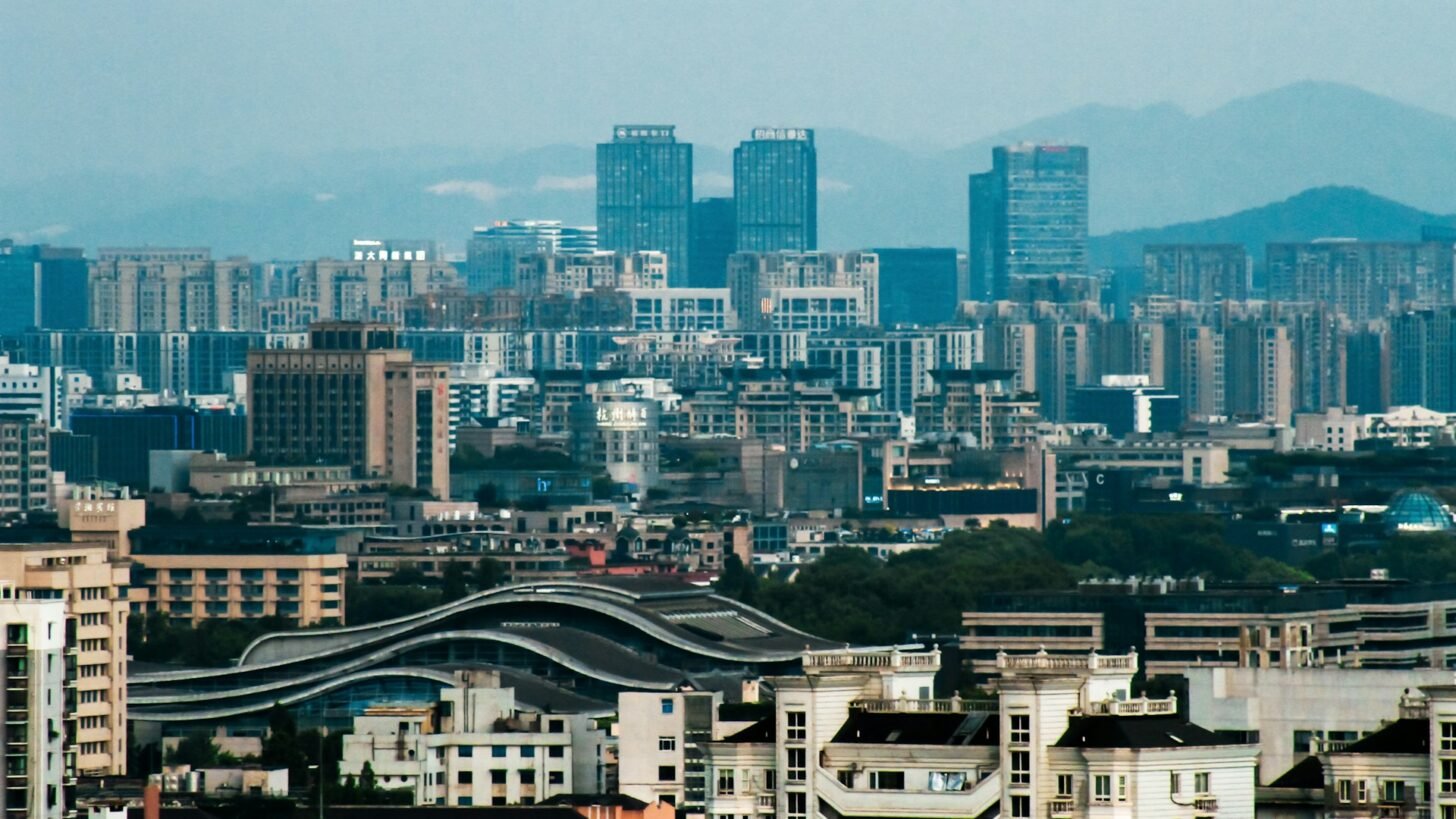
But enough about that. I’m not here to talk to you about language learning. I’m here to talk to you about the beautiful city of Hangzhou, or ‘Hang Joe’, if you want to say it in a really English way. I went to Hangzhou for a few days, a few weeks ago when I had my mid-autumn holiday, and it was a wonderful experience.
In Chinese, they have a saying: 上有天堂,下有苏杭 (shàng yǒu tiāntáng, xià yǒu sūháng), which means ‘above there is heaven and below there are Suzhou and Hangzhou’, which are two absolutely gorgeous historic Chinese cities. If you’re wondering why I said that so dramatically and so singsongy, that’s the way that classical Chinese poetry is performed. It’s like a kind of declamation? I think that’s a word in English. It’s a kind of performance, a way of speaking the words that’s used in poetry and opera in Chinese. So I thought I would just try and be a bit dramatic and theatrical in my second language.
Anyway, I completely agree with the saying. I think Hangzhou is one of the most beautiful cities I have ever been to. It’s super vibrant. It’s quite a bit bigger than Ningbo. I think Ningbo has 9 million people and Hangzhou has 12 million, 16 million? It’s a bigger city and I really felt it as soon as I arrived.
So I got the high-speed train from Ningbo to Hangzhou, and as soon as I got out of the metro station to go to my hotel and I kind of was in the centre of the city and felt the energy. I immediately felt like such a buzz, such an energy that I haven’t really felt in Ningbo. Ningbo is a much more quiet city, but Hangzhou felt very bustling, alive, a bit chaotic. And like it has a lot more culture going on.

It actually reminded me more of Japan in the sense that there’s a lot more narrow streets in the historic part of the city. There’s a lot of chaos with like bikes and mopeds and stuff moving around. There’s also more kind of historic streets, so they call them hutongs. Hutong in Chinese is like an alley, but basically they’re these small historic streets that people live on either side. So like a lot of old Beijing neighborhoods are just a collection of hutongs. And they’re almost like a maze when you walk around them, but they feel so alive. Like you can walk down a hutong and see into people’s houses. They have like sinks inside. They have plants everywhere. It feels like a much more kind of authentic old style of living, and I found like a cute little bookshop/café in one of the hutongs, and this was within like a few hours of me arriving.
So it just immediately felt that kind of, that buzz that I really love in a city. Now, my hotel was very conveniently located. My hotel was really close to West Lake. West Lake is the main attraction in Hangzhou. It’s a massive lake surrounded by beautiful hills and many historic sites. But my hotel was not very nice.
Now I’m struggling to know what’s like, the right price of hotel to get here because hotels are generally way cheaper than in the UK. I don’t go to hotels very often, so I thought I was booking a cheap but nice hotel, and it wasn’t awful, but my room was kind of mouldy, like it had a patch of mould on the ceiling and it was really damp. Like, I came back one day and my shirt was wet with sweat, so I hung it up and the next day it was still wet, so that wasn’t great. I think I actually got a bit sick because the hotel room was so mouldy and mildewy, so that wasn’t ideal, but that didn’t really matter because I spent most of my time exploring the city and some of the beautiful places nearby walking around West Lake.
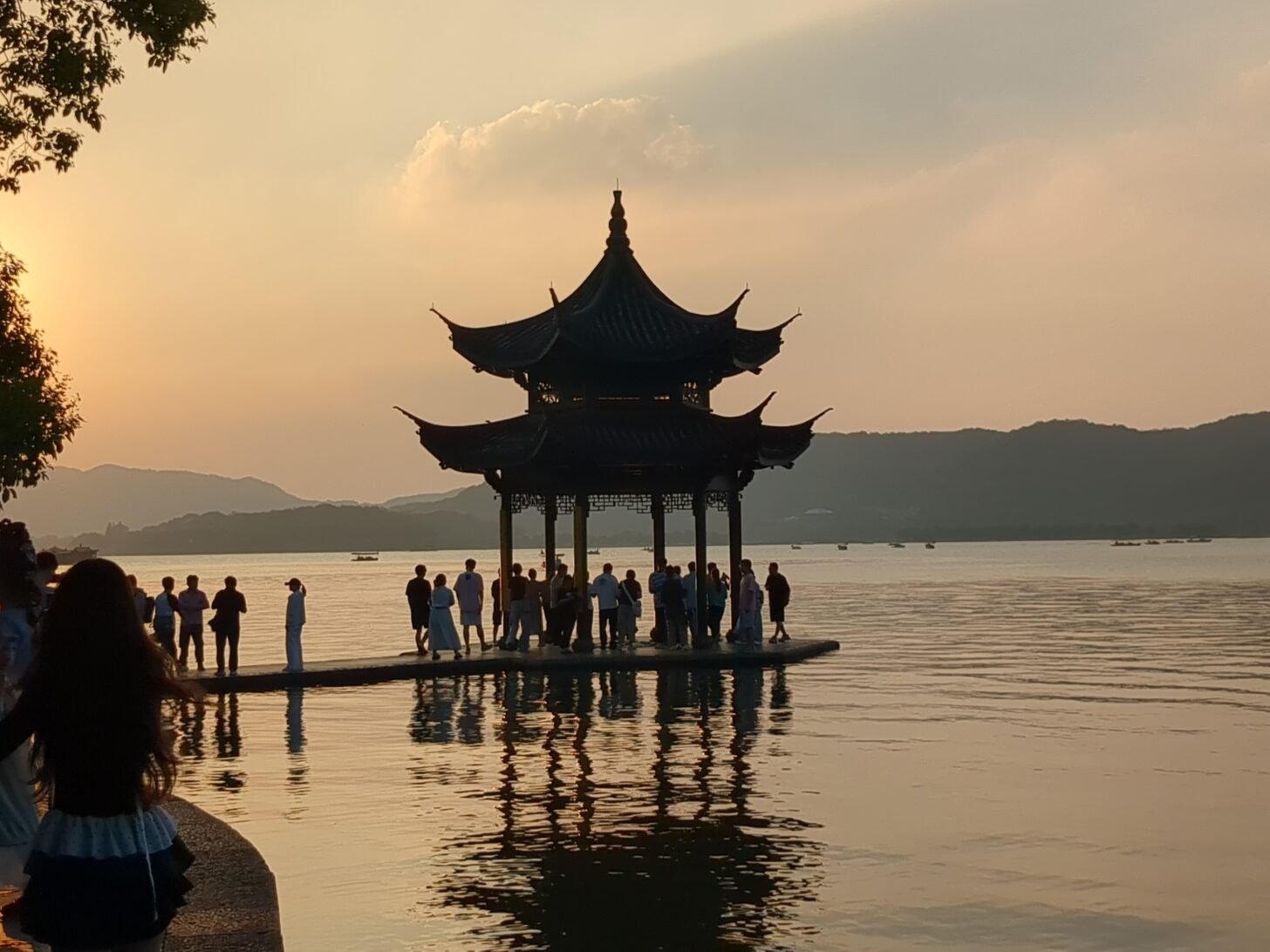
Especially as the day turns into the evening, especially around a time like that, where it was just before the national holiday and there were loads of people traveling, it just had such an amazing atmosphere. There were old men doing calligraphy with water, so they would take a big calligraphy brush, dip it in water, and then write beautiful poems like, on the ground ’cause it was very hot so they could write poetry in water. There were people just dancing randomly. I saw some drunk delivery drivers just having a boogie in a park by the lake. There were old couples doing like couples dancing, like swing dancing and stuff. In the evening there were a bunch of people dressed in historic Chinese outfits doing photo shoots. There are street vendors. There are little jewellery stalls. You can get ice cream, you can get drinks.
Just like such a cool atmosphere. Like that’s one of the things I love about China is there’s this real vibe of like just going out in the evening, especially in summer, walking, talking, laughing, playing. It’s a real convivial environment.
And of course you have to do a boat trip around the lake. That’s the kind of touristy thing that I would normally avoid. But it was so cheap. It was 50 kuai, which is like five pounds, and these boats are really cool. They have these like big golden roofs and all of the inside is like traditional carved wood with traditional wood seats.
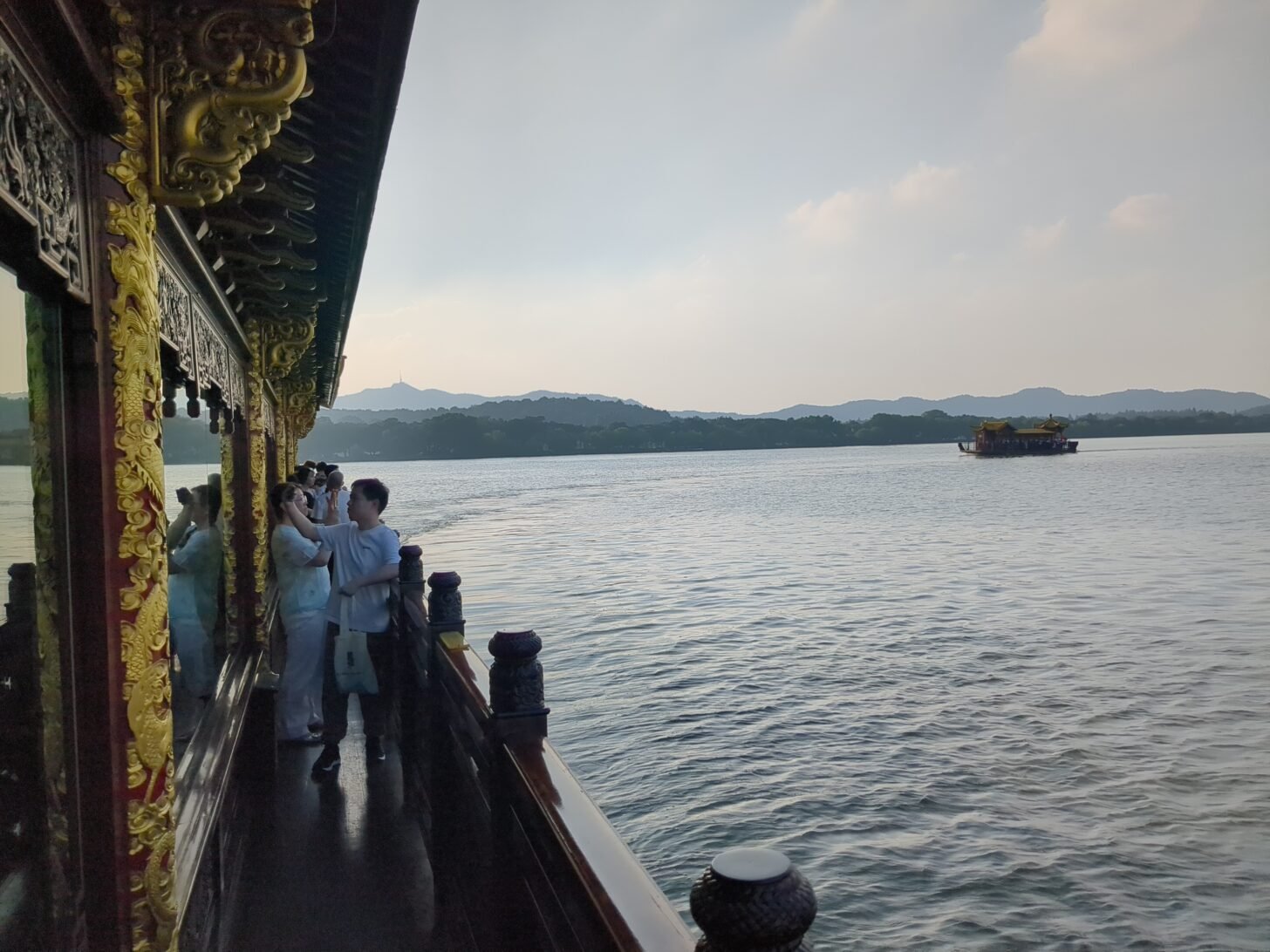
So I got on one of these boats around golden hour just as the sun was setting and everything looks really gorgeous and we went all around the lake and it’s so beautiful. Like I will put some pictures on the transcript. I’ve put some pictures on Instagram, but I really recommend, if you can, if you go to Hangzhou yourself, because it’s truly just gobsmackingly beautiful. It’s so lovely, especially at that time of day.
I think I picked the perfect time because the light made everything just so gorgeous. It was shimmering on the water. Oh, you can see all these lovely like historic temples and pagodas, like in the distance in the hills. There’s an island in the middle of the lake, which I didn’t have time to go to, but it looks amazing, like just seeing it from the boat. It was just great.
The next day I went over to Lingyin Temple, which is a big historic Buddhist temple near West Lake. It’s kind of to the west of West Lake. So I got a bus there and I can’t even really sum up this temple. It’s just so big. Like you would go in and go into this massive hall and see these massive Buddhist statues, and then you would go out the other side of the building and realise there was like another building behind it, and then you go up some steps and there’s another building. So altogether in this temple compound, there was about, maybe eight to ten like massive buildings with amazing sculptures and history in them.

There was this room that had, I think it was 500 arhats. So an arhat in Buddhist mythology, I guess, is someone who has attained enlightenment. So it’s basically just 500 statues all lined up of these guys who attained enlightenment. And every one of them has like a different facial expression. Like some of them look confused, some of them look happy, some look sad, some look serious, some are laughing, some of them are holding animals, some of them have a cup of tea, some of them are doing magic and like conjuring smoke.
And I just walked around this building and looked at every single arhat, and it really overwhelmed me with this experience of like, oh, wow, like everything is OK. Like every kind of personality is OK. There’s not like one kind of person who attains enlightenment, right? All different types of people can reach that spiritual freedom through their own ways. That was the message I took from it.
And generally, I had a much more spiritual experience at this temple than I expected. Often I find Buddhist temples in Asia can be like really, really touristy, but I was able to just connect here and I felt like a real sense of relaxation and, yeah, spiritual depth. That was really, really lovely.

I also went to Yongfu Temple, which is very close to Lingyin Temple. It’s much smaller, it’s less touristy, and it’s higher up in the mountains, so you get some spectacular views, and that part felt really peaceful.
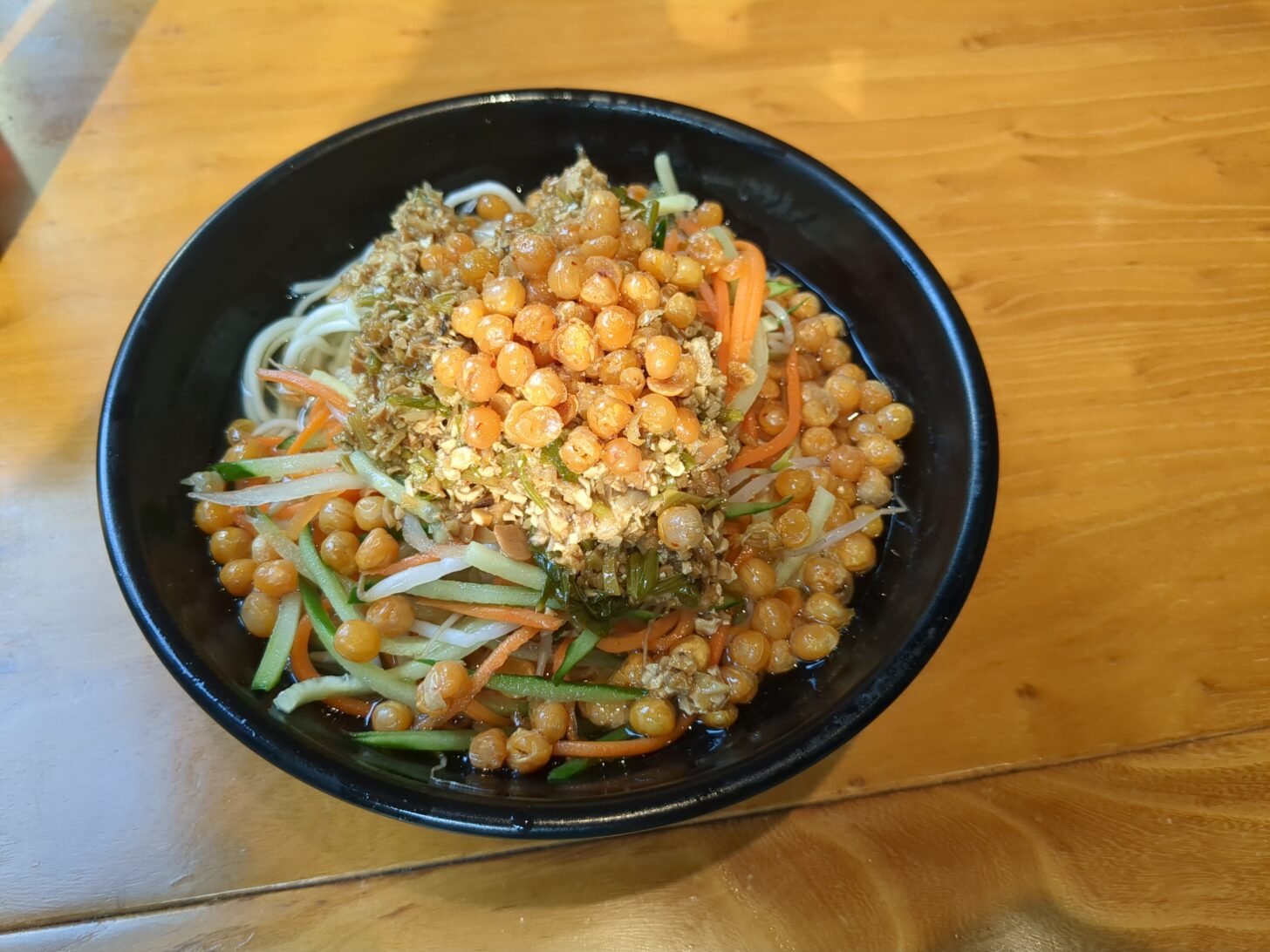
And while I was there, I had the best bowl of noodles in my life. There was a little restaurant, I think it was Buddhist vegetarian, next to Yongfu Temple and I got a bowl of these noodles that had like, um, fried soybeans and stuff on them, and it was just, it was just so good. Like I was hungover and hungry, so that probably seasoned it, but like it was just the most delicious noodles I’ve ever had. Like it was so, so good. And it wasn’t spicy. It was super refreshing, super wholesome, just, oh my God, I genuinely want to go back there and have those noodles again because they were just so good. They were just so good.
While in Hangzhou, I also explored the mall culture a bit, and one of my friends took me out for lunch, which was very nice, and I actually took a big dip into the local nightlife scene, but I’m not going to talk about that here. I’m going to do that as a bonus episode for people who are subscribed to Easy Stories in English Premium. So you can subscribe to Easy Stories in English Premium at EasyStoriesInEnglish.com/Support, or on Apple Podcasts, you can do it directly through the app.
I haven’t done many bonus episodes, but um, I’m going to talk about some topics in this bonus episode that maybe I don’t want on the main podcast because, uh, it gets a bit juicy, let’s say. So if you want to hear all about my escapades in the Hangzhou nightlife scene, then I strongly recommend you join Easy Stories in English Premium to get all the juiciest gossip.

So I returned from Hangzhou to Ningbo feeling very fulfilled, feeling very tired, to be fair. It was quite a few intense days of sightseeing. I was gonna go to this historic village, but I just didn’t have the energy and that’s fine. I like to be spontaneous. I like to change up my plans, but yeah, I still had most of the week left for my holiday.
So one of the things I did when I was back in Ningbo was I started cycling again. Now, I had not cycled, I had not ridden a bike for 18 years, and the reason for that is very simple. When I was 14, I was riding a bike down a bike path in rural Cornwall in the UK with my family. We were on holiday. And I fell off my bike and dislocated my shoulder and it took us many hours to get to accident and emergency, to get to the hospital, because there aren’t a lot of hospitals in rural Cornwall. In fact, there just aren’t a lot of hospitals in Cornwall generally.
So that was quite a traumatic experience, and after that I was very nervous about riding a bike, and the longer I left it, the harder I got. Because they say you never forget how to ride a bike. But I was pretty convinced I could do it, so I didn’t ride a bike and I generally wasn’t a sporty person, so I just kept putting it off and putting it off.
But I wanted to start riding again while I was here because it’s really convenient to ride a bike here. There’s lots of bike paths. It would allow me to get to work very quickly. It would allow me to get into the city centre without having to use the metro. It would be good exercise, and I just wanted to try and face my fears.
As you know, I’m on a bit of a kick of facing my fears and doing the things that are a bit scary for me. So on that holiday week, I opened a subscription on Hello Bike, which is a local bike rental app, and there are bikes everywhere here, which makes it super convenient. And I got on a bike and started riding.
Now, the first hour or so was quite nervewracking. I would just cycle up and down the path. The reason I started doing it during that holiday was because on National Day, which is celebrating the founding of the People’s Republic of China, there was like nobody out, like there were no cars in the street. There were barely any people in the street because on that day, everyone is at home with their family. So I thought, this is the best opportunity I am going to get. This is going to be the safest time for me to practice cycling. I’m not gonna get hit by a car if I cycle now.
So I spent about an hour just cycling up and down the road, cycling around the block, and then finally I built up my confidence and went a bit further, and the rest is history.
I fell in love with cycling. There’s something about the speed while you’re feeling the wind on your face, seeing all the trees, there’s just something about it that’s amazing. It really allowed me to get a mental map of the city in a way that walking just is too slow to do. It gave me a sense of freedom. It was such a good form of exercise.

I cycled down to this park and I knew there was this place I’d seen on the map in Ningbo where there’s like a big line of green parks kind of going across several roads, but I didn’t realise that this was a whole ecological corridor. So it’s basically like a big chain of green spaces that you can walk or cycle along continuously. So I cycled down the ecological corridor for maybe an hour. It had a really, really good biking infrastructure. It’s really pretty. You go under lots of bridges. There’s lots of little gardens and stuff like that. It was just a gorgeous, gorgeous time.
And from that day on, I’ve been hooked on cycling. I cycled around to really distant parts of the city all that week. I got lots of exercise, I sweated a lot, um, and I’ve just had a good time. And since then I’ve been cycling to work and cycling whenever else I can. The only time I haven’t really cycled is when it’s been raining too much.
Now, the other day I did get hit by a moped. I was cycling home at night and some of the bike paths are pretty narrow and they have like a railing on one side and someone was coming on a moped in the opposite direction and his light was on pretty bright, so I couldn’t see him. I could just see the lights. I rang my bell and I stuck to the right because I was like, people drive on the right here, so I’ll stick to the right and he should go around me. And people on mopeds here are just generally pretty terrible at driving. They will turn at the very last minute, like make you think you’re about to crash into them, and then look at you like, why are you stopping your bike? What’s your problem? It’s, it’s a bit much.
But yeah, he was coming closer and closer and I was like, oh, he’s about to turn. And then he didn’t, and then I saw that he was looking at his phone. So I went, ‘Ah!’ And then he looked up and crashed into me. Now I had braked. He wasn’t going too fast, so it didn’t hurt me at all. He just crashed into me and his moped fell over. But I was like, why are you looking at your phone driving down a narrow lane at night? Like, what are you doing?
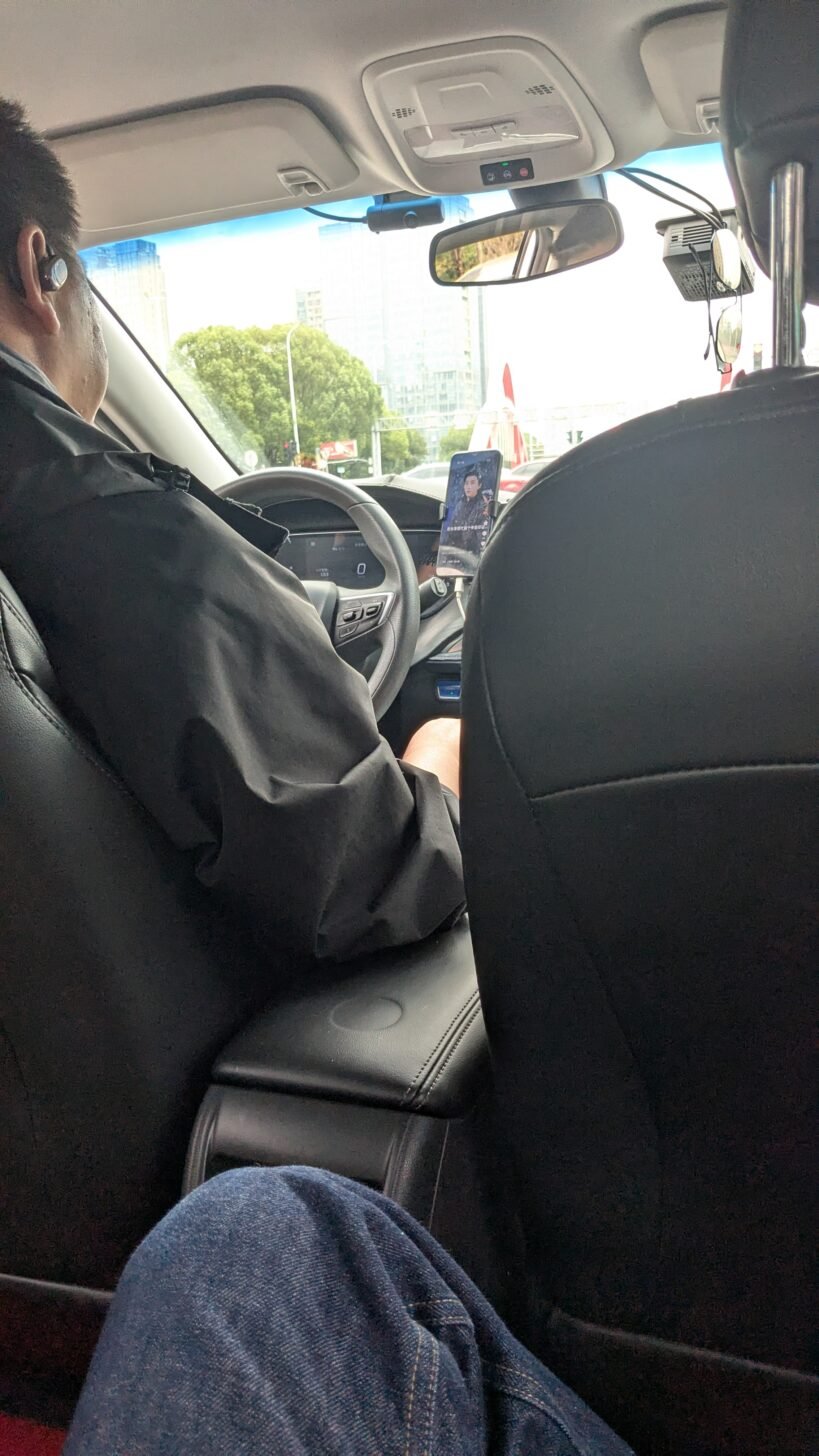
And unfortunately, this is not the first person I’ve seen doing this. I’ve seen people stopping at intersections on their mopeds and they’ve got their phone on like a stand, and they’re like reading a novel or watching TikTok while driving, so that made me really angry. Some people are looking at maps and I think that’s OK, especially if they’re a delivery driver, but he had absolutely no reason to be looking at his phone, and I think maybe he thought because it was night and it’s not a busy road that there wasn’t gonna be anyone there, but maybe if he had used his eyes and also his ears! I rang my damn bell. People don’t seem to react to bike bells here, like people don’t seem to realise that the bike bell actually means something. To be fair, I’ve never heard another cyclist ring their bell, so that doesn’t help either.
Also a lot of pedestrians just walk in the bike lane and then when you’re like ringing the bell to be like, get out of the way, they kind of look at you like, what are you doing? And I’m like, well, you’ve got a bloody pavement right next to you that’s designed for you to walk on. There’s no reason for you to walk on the bike lane. Why are you walking on the bike lane? Sometimes they’ll walk like right in the middle of the cycle path. It’s annoying.
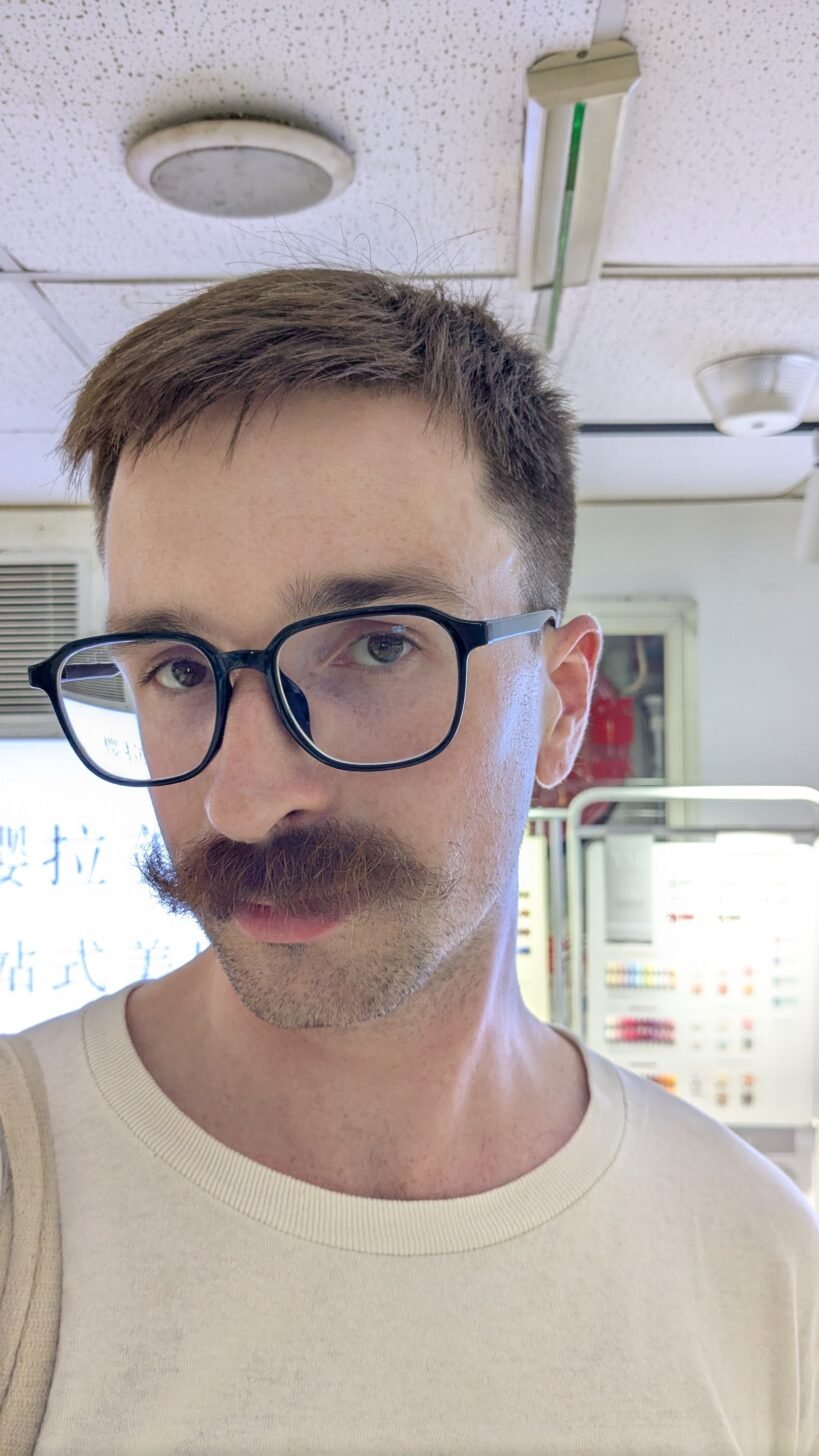
Also on that holiday, I went to the hospital and got an eye test, and then I went and bought a new pair of glasses, which you can see. These are my new glasses. I think they’re all right. The glasses you get here have more of an Asian style. It’s very subtle, but there’s like a difference in the styles of glasses that are popular here. This frame was pretty cheap, to be honest, because the frames that I liked more, I didn’t like that much more, and they were significantly more expensive, and I was like, what’s the point? I might as well just get the cheap one if I don’t love it. I think it’s fine, but it’s certainly, yeah, just different from the style I would get in the UK. There’s something about the, the kind of boxiness of it.
Also here there are a lot of people who wear these kind of like short glasses, like the frames are very short. Um, it’s more of like a rectangle than a square. And that style is super out of fashion in the west, like it’s seen as very nerdy and like very nineties. But here it’s still very popular and it seems kind of like, oh, sexy professor. So I don’t really know what that’s about.
And I discovered a new kind of café/restaurant, which is a house café, which is when someone operates a café out of their house. So I went on Dianping, which is this app for like finding restaurants and attractions around you. And I saw this really cute-looking café that had like a really homely vibe and it was almost impossible to find. I was going into this building where it said it was, and I couldn’t see any numbers and there was a lift that was for like residents of the building and eventually I went up the lift because someone said it was on like the 21st floor.
And then I met someone in the lift who was going to the same café. And the café was called like 2114, which means like room 14 on floor 21. So eventually we realised like, oh, so it’s an apartment room. I didn’t know this before I went. And we like turned the corner in this corridor of like apartments and found the entrance to this café.
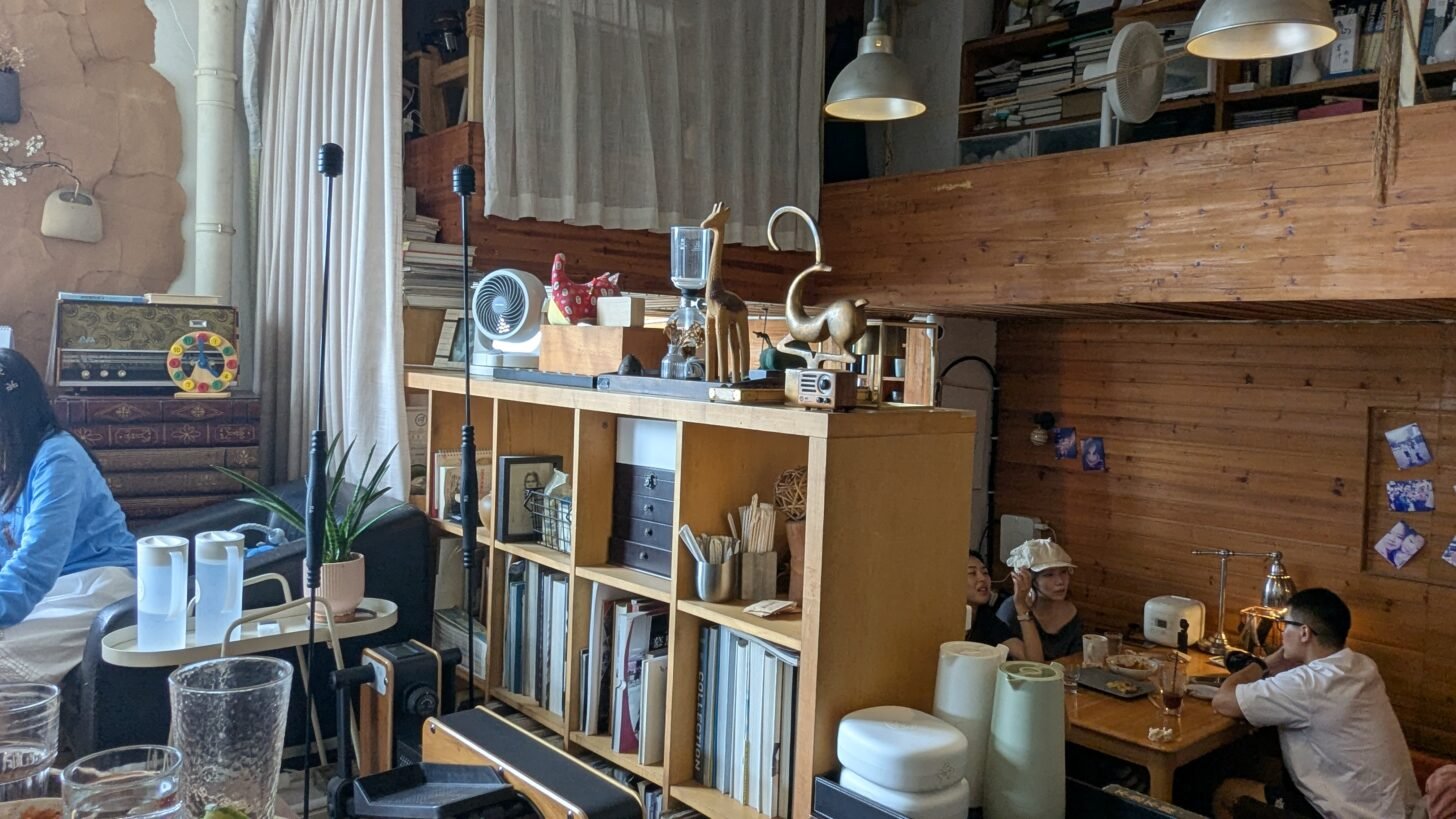
And we went in and it was, it was really cool, but it was also very weird because it was like, yeah, someone’s house where they had like the bed bit covered and they had some like storage and stuff and they had the bathroom with like a full bathtub, but there were also a bunch of café tables set up and there were like three people working in the kitchen. It was probably the most like comfy café I’ve been to since I’ve got here. It was, I think the first café I’ve been to that I really felt like, oh, this reminds me of like the kind of the comfy cafés, like little independent cafés that I like going to in London, for example. So that was nice, but it was just such a surreal experience.
And apparently house cafés are very trendy right now in China, so there we go. In the UK it would almost certainly be illegal, or I just think people wouldn’t want to do it, but here it seems to be kosher. So, yeah.
Several of you have asked about the results of my Japanese exam, because as you may remember, I did a Japanese exam earlier this year, and I did get the results. I just forgot to tell you before.
I passed! Woo! Now, the pass mark is 100. You need 100 out of 180 in the whole test to pass, and there are three sections, each worth 60 marks, and you need at least 20 in each section to pass. I got precisely 100 overall. I got the exact pass mark, and at first I felt a bit like, oh my God, is that a bad thing? And then I thought, no, that means I was maximally efficient. I calculated the precise right amount of time to dedicate to studying, and I got exactly what I needed and I did not invest any unnecessary effort.
And to be honest, given that I was changing jobs and preparing to move to China and I was like travelling quite a bit while preparing for this exam, I think I did really well. Also, this is an exam that very few people pass who have not lived in Japan, so I guess I’m just different. But yeah, it was really validating and I’ve got the certificate, or rather my parents have got the certificate. The certificate has been delivered to my parents’ house and I’ve got a scan of it. So I will collect it next summer. But that’s a really nice feather to have in my cap, a nice arrow to have in my quiver, yeah? Just like a nice little thing to put on my CV.
And I am thinking I want to do the HSK, which is the Chinese equivalent of that exam. I would like to do the highest level of the HSK. Obviously not now, but when I’m ready. I think maybe late next year, if I keep studying hard, I may be ready for the HSK, but certainly that’s one of my goals while I’m here. And part of me is like, maybe I should just do the Spanish one and the French one and the German one and just have like C2-level certificate in all my languages. I think that would be really fun. Um, yeah, probably not super useful, but I think it would show that I can put my money where my mouth is.
Sorry, I’m using a lot of idioms in today’s episode and I’m talking quite fast in today’s episode. To be honest, I had a coffee this morning and I still haven’t eaten breakfast, so I’m probably a little bit manic, and I think I’m also just enjoying recording in front of this gorgeous view, so. I need to get better lighting, but one thing at a time.
Anyway. I finally just want to mention some weird small things I’ve noticed about China. Some like little odds and ends.
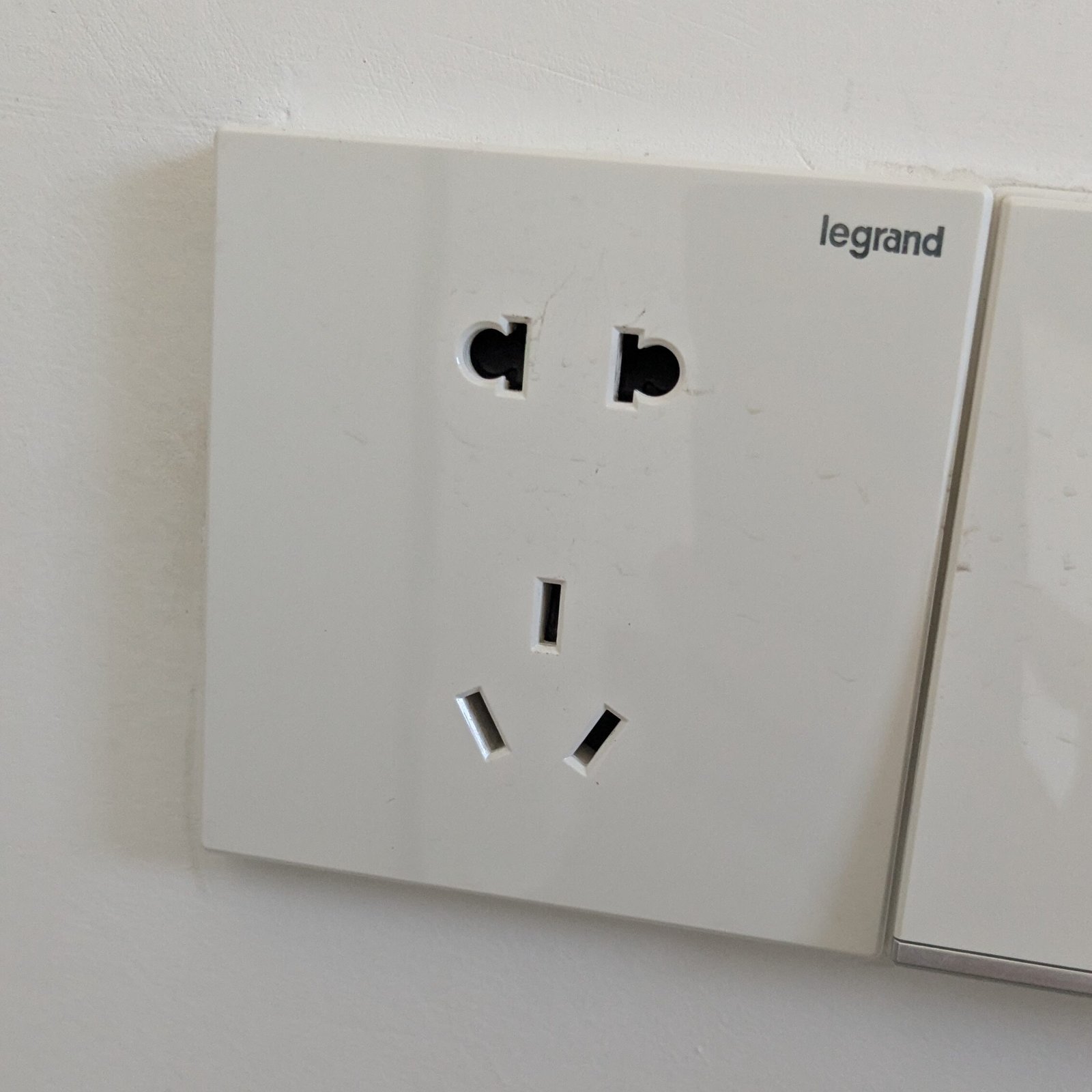
So one thing is the plug situation here. So China has like two types of plug sockets, I think technically three. All of the plug sockets in China, more or less, have two holes. They have like a hole for the two-pronged one and a hole for the three-pronged one, and sometimes they’re kind of like all close together. So you have like five holes all together. I’ll add some pictures to the transcript to make this clearer.
What surprised me is, when you buy electronic goods, it’s kind of a 50-50 toss-up whether it’ll be a three-pronged plug socket or a two-pronged plug socket. It seems to be that maybe lower voltage appliances use two volt plug sockets, and then higher voltage ones use three-pronged plug sockets. So, for example, my hair dryer uses two prongs, but my computer uses three prongs.
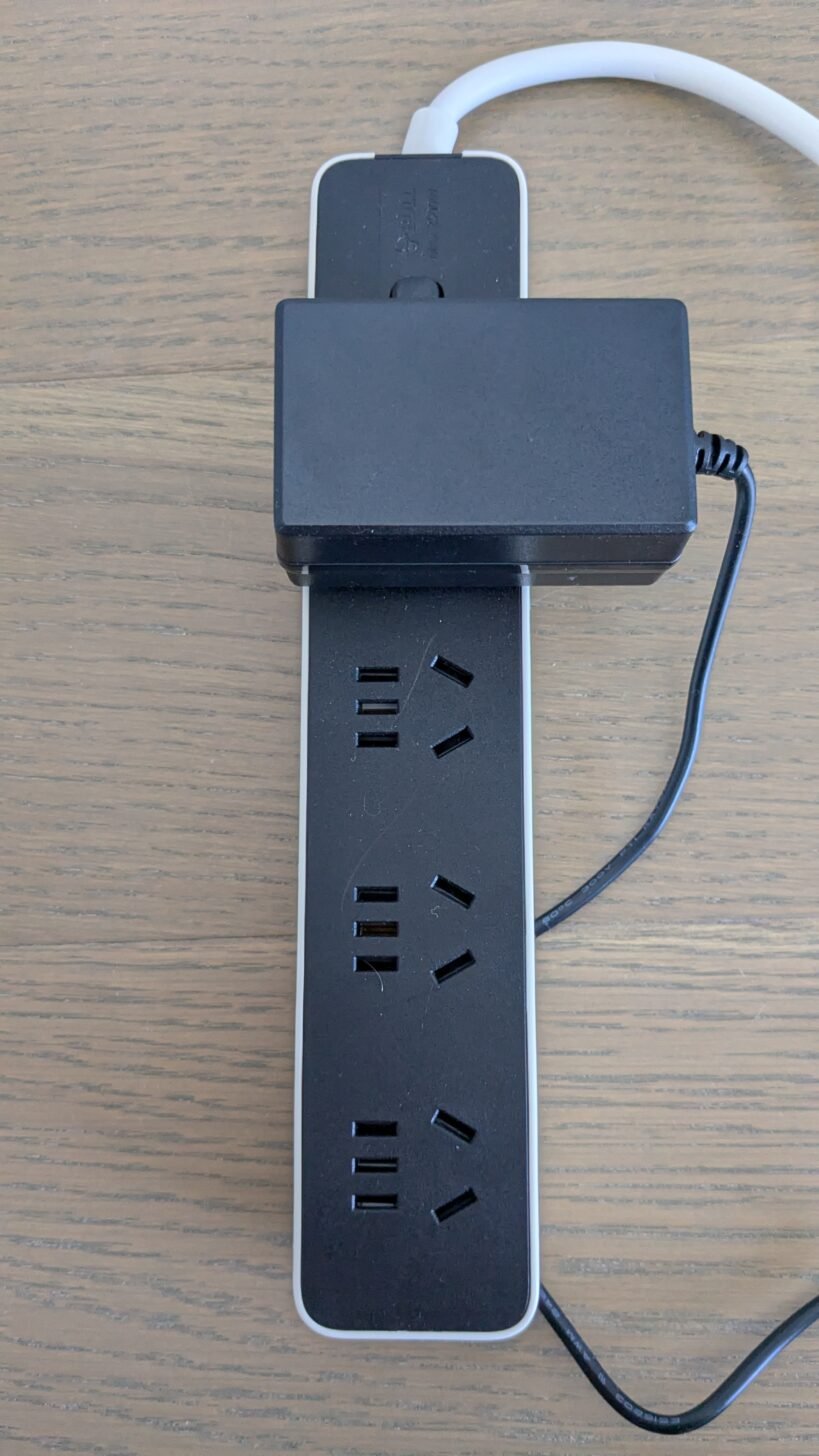
It’s not that interesting, maybe, but I do find it kind of unusual. It’s honestly more complicated than I expected, but I kind of like how it looks, and British plugs are very safe. We actually have the safest kind of plugs in the world because they have very big prongs, and one of them is to earth the plug, so it’s to make sure that you don’t get an electric shock. But British plugs are very big and chunky, and Chinese plugs, the little box in the wall uses about the same amount of space, but it’s able to have two types of plugs in there.
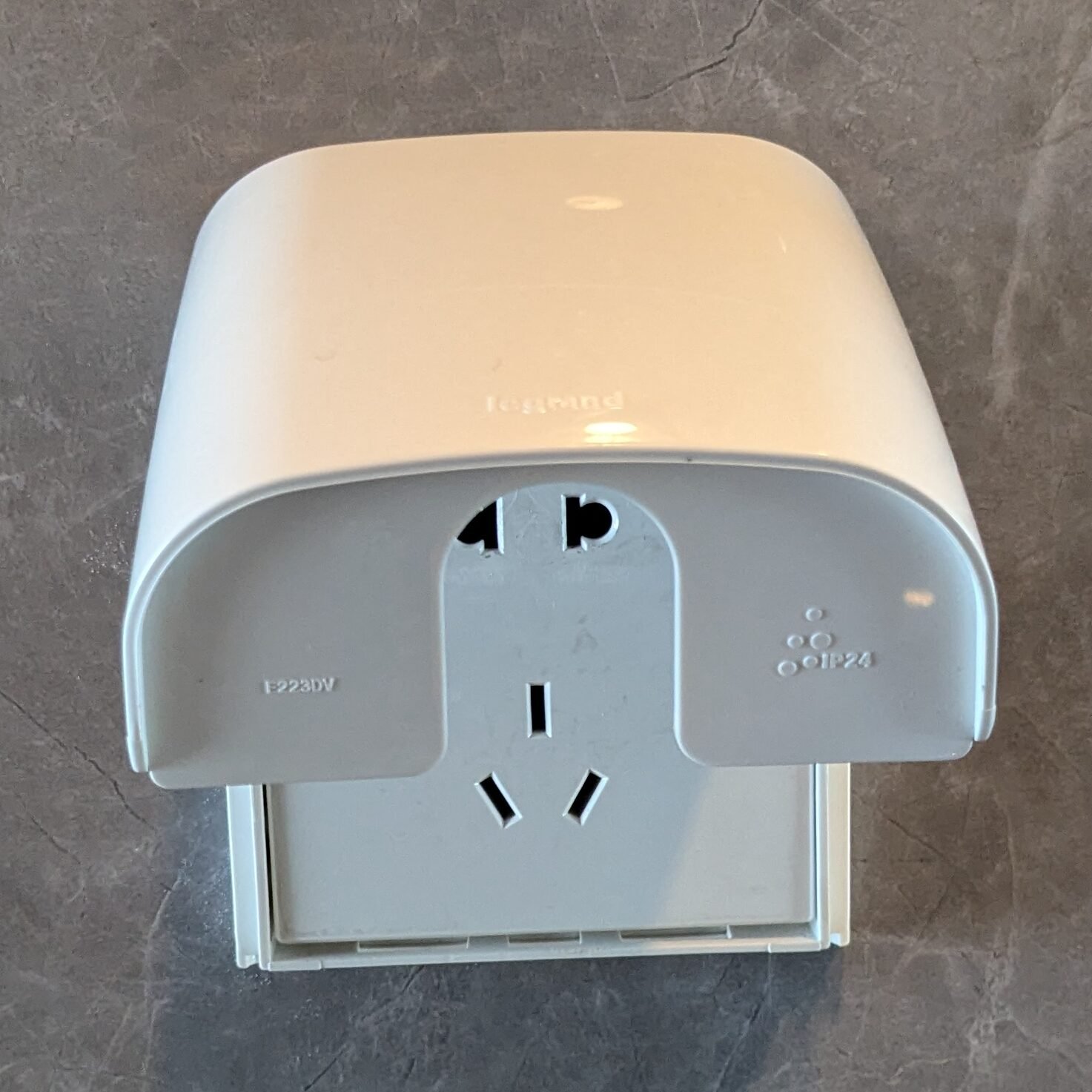
What’s also cool is, in one box, you can plug in like a three-pronged device and a two-pronged device at the same time. Also, a lot of the plug boxes in many rooms have like a cover. Um, and because of the way the wire goes, you can like plug in a device and then cover it up and that looks a bit nicer and is probably a bit safer as well.
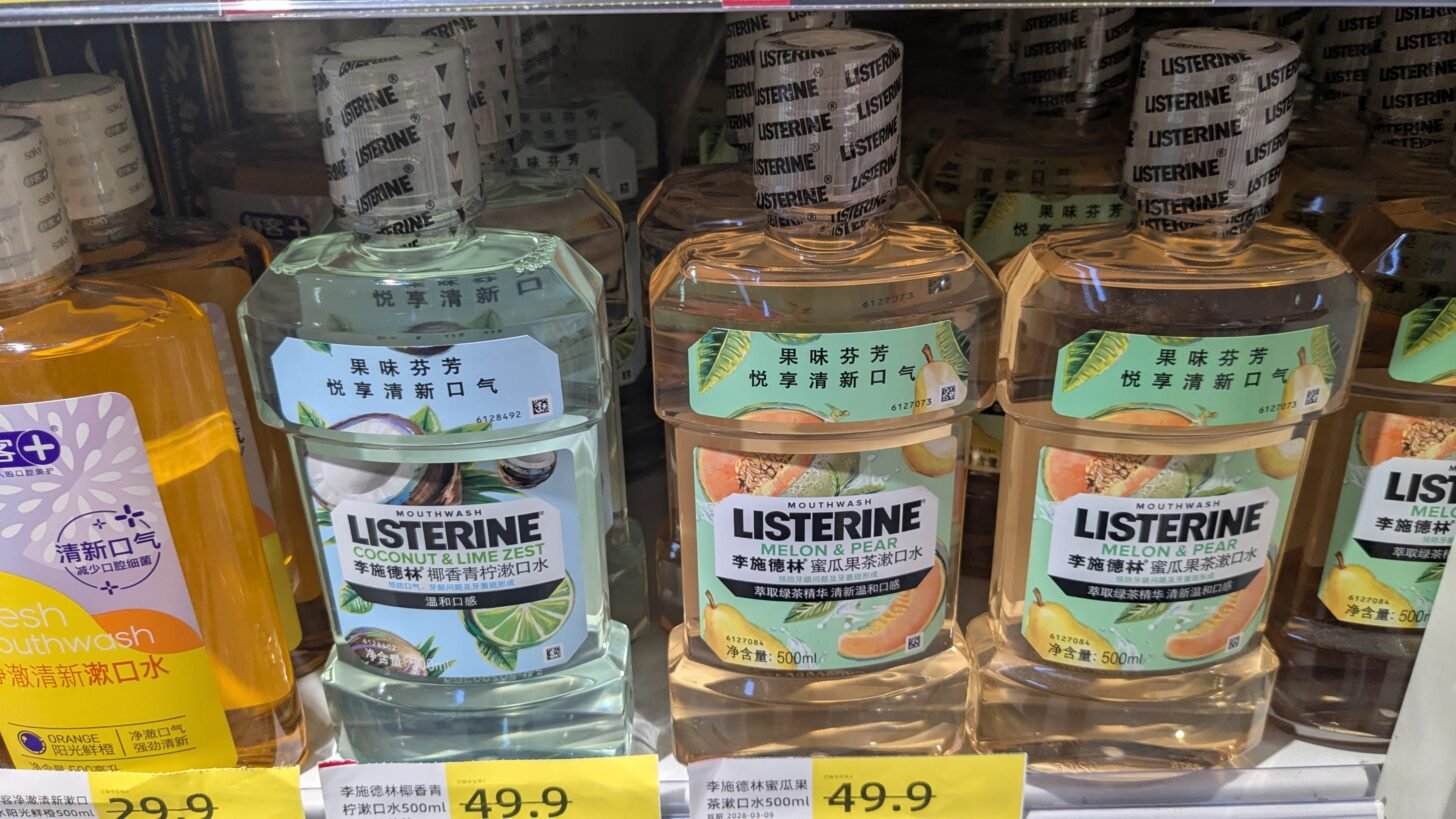
I talked about Listerine on here before. Sorry, this is really not that interesting, but I find it kind of amusing. Listerine is mouthwash and I discovered yet more unorthodox Listerine flavours. So if you come to China, you can wash your mouth out with pomelo and passion fruit mouthwash, melon and pear mouthwash or even coconut and lime zest mouthwash.
Now, coconut and lime zest sounds really disgusting to me because there’s something about the taste of coconut that I either associate with desserts or alcohol, because I think of Malibu, which is like a popular coconut-flavoured alcohol. So the idea of using coconut mouthwash to me is just like disgusting, and just generally the idea of fruity mouthwash is very strange to me.
Another thing that’s a bit funny here is um, sulphur soap. So sulphur is this element that smells of rotten eggs, and there’s this brand of soap that has sulphur in it that’s quite like an old-fashioned brand here, and it’s supposed to be good for acne and generally kind of skin conditions. And I bought it ’cause I was curious. But then for weeks I was like, why does my bathroom smell? Why does my towel always smell? And it took me a really long time to realise that obviously it was sulphur and sulphur smells of rotten eggs.
So when you’re putting the soap on in the shower, it smells fine, but it’s when you get off and like dry your body that you get hit by this odour of like, eggs, sulphur. So, uh, I’m gonna use up the soap I have and then I’m gonna move on to some potentially less smelly soap.
Finally, I just kind of want to give a shout-out to Chinese tissue packets. Um, so this is, I’ll do a bit of ASMR and then I’ll stop ’cause it’s probably not that pleasant. And that’s the plasticky packet. And let’s take a tissue out. Now I’ll blow my nose. God, how delightful. You’re all so lucky.
Anyway, in the UK, tissues come in cardboard boxes that are quite annoying because they never hold as many tissues as you want. And then when you finish them, you have to like break them open to fold them up and recycle them and they’re just annoying and they’re kind of boxy, and yeah. Here tissues come in these little plastic packets and they’re super convenient and they’re super cheap, so you can buy them in bulk and then just have all these little plastic packets. So I have like a packet of tissues in every room. And then when you’re done with them, it’s just a bit of plastic that you throw in the bin. It’s super convenient.
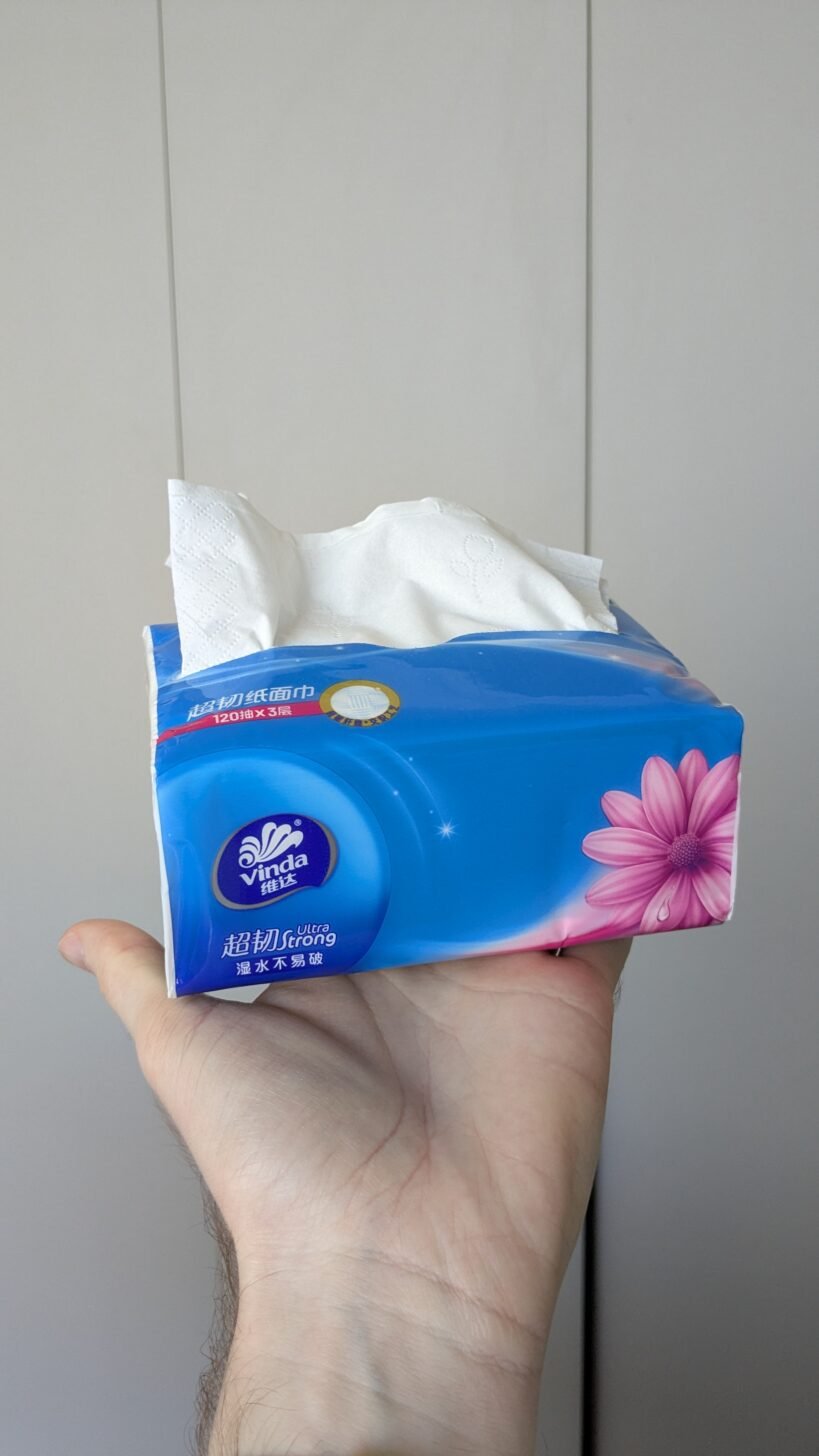
I don’t know why I find it so much better than the cardboard boxes. I think, I mean, obviously it’s worse for the environment. Oops. But, um, it’s just the convenience of it. And there’s something about these packets. I think it’s also the size of the tissue, you know, because they’re perfectly sized both to blow your nose and to wipe your mouth. So they’re used a lot because a lot of Chinese food involves like messy sticky eating, like touching food or getting food all over your face, like spitting out bones and stuff. So it’s very needed to have a packet of tissues with you at a meal. They pretty much always provide a packet of tissues on your table at a restaurant.
So there’s something about the size, but also they’re like thick enough, ’cause a lot of smaller tissues in the UK are really flimsy. I don’t know, it’s probably not that big a deal, but I just have found myself very satisfied with Chinese tissue packets. There’s something really nice about when you buy the big box of them and they’re all like stacked up together like, and you can see, you can see, because the side of the plastic is transparent, you can see exactly how many tissues you have left. I’m telling you, it’s a game changer. Chinese tissue packets are just revolutionizing the world. Forget all the technology, forget the infrastructure. It’s tissues where they are really sending the West into decline.
Anyway, I really need the toilet. So I’m gonna end this episode here. I had that in class the other day. I had to go to the toilet in the middle of class. It was really awkward. Um, uh, remember if you want to hear the juicy salacious goings on in the nightlife venues of Hangzhou, then you can go to EasyStoriesInEnglish.com/Support and join Easy Stories in English Premium for just a few dollars a month. Or you can join it on Apple Podcasts. There should be a link at the top of your app, I think. I’m not really sure. I don’t have an iPhone.
But if you would rather stay in the light, stay in your innocence, protect yourself from oh, such dirty, horrible things, then you can look forward to the next episode of Easy Stories in English.
Bye! Now I really need the toilet!
Leave a Reply